
.jpg)
Web Design Trends 2026 Part 2: 6 Emerging Styles Shaping the Year
Stay updated with web design trends 2026, featuring TL;DR experience, 2.5D design, and more, plus useful implementation tips.



People tend to like things that are unique, new, and different from what has ever existed. It encourages people who work in the creative world to present what other people expect. Brutalism is a style in graphic design that was born out of a desire for unique and unconventional design aesthetics. The brutalist design style rise in the early 2010s was a breath of fresh air for designers who wanted to experiment with different styles and layouts.
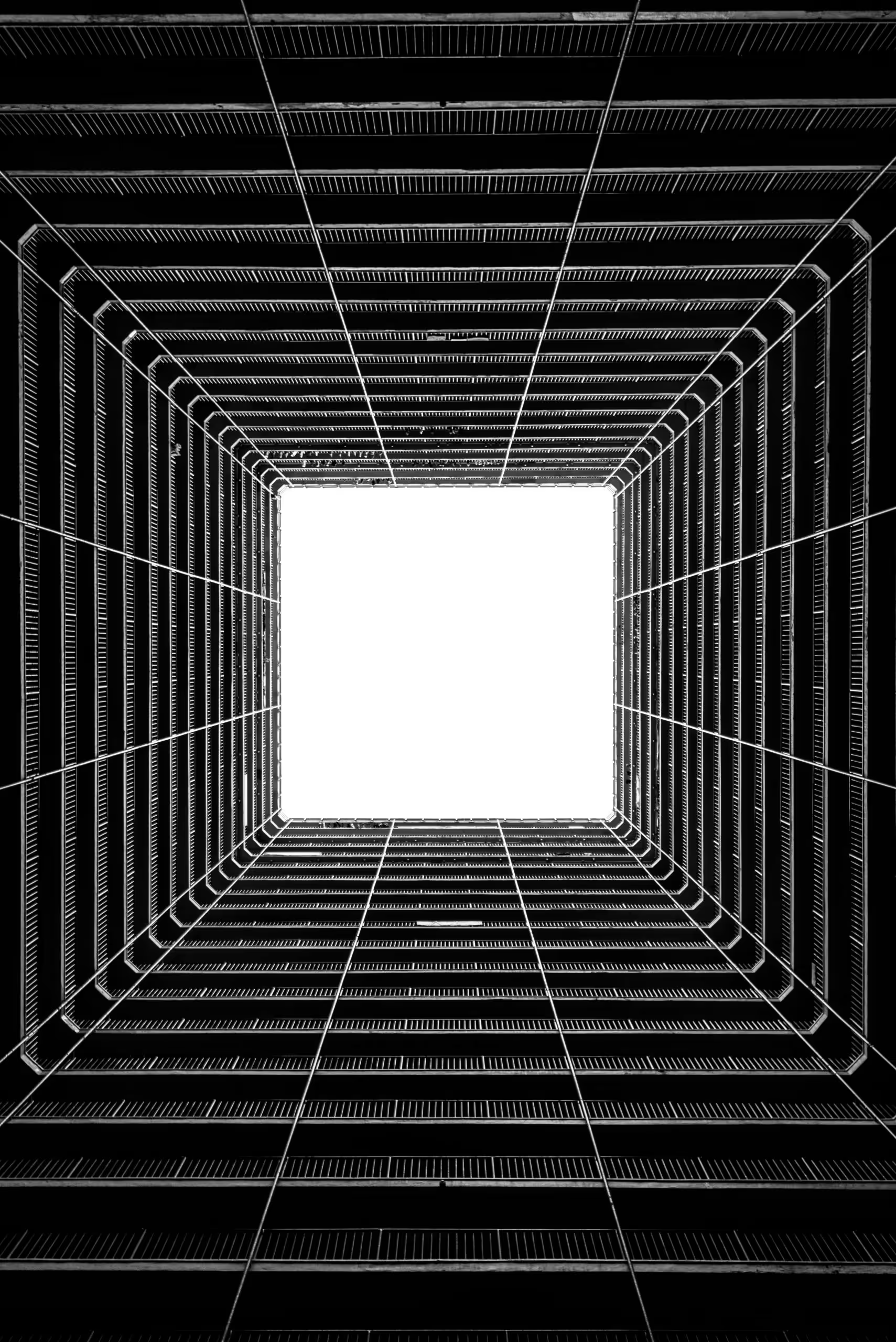
Brutalism in graphic design takes inspiration from architectural brutalism that emerged in the mid-20th century. It is a style known for its raw and utilitarian aesthetics. The design style emphasizes simplicity and functionality and focuses on unfiltered and honest design elements. These are characters that have similarities, both in the fields of architecture and graphic design
Identifying a brutalist design style can be hard. Moreover, other aspects influence it, such as the media used and the designer who created it. Apart from all that, here are some common features that define the brutalist style.
Brutalist design style is honest and straightforward. Therefore, it embraces minimalism. The use of a limited color palette, basic geometric shapes, and bold typography is how it shows its minimalism.
Forget the symmetric grid for layouts since brutalist deviates from traditional grid structures. It is intentionally arranged irregularly and unconventionally. You will find the elements to be in unpredictable juxtapositions and compositions.
Brutalism encourages designers to use textures and distressed or weathered elements to show rough and unpolished aesthetics. Besides, it also lacks decorative elements. So, it will lack of distraction. You can avoid gradients, drop shadows, and ornate details.
Grayscale and monochromatic colors represent architectural brutalism. It relies on gray, black, and white shades. Even if there are colors used, it is usually only certain bold and contrasting colors. It is useful for attracting attention to specific content or messages.
When you choose a brutalist design style, visual appeal is not your priority since it prioritizes function and content. Thus, it often foregoes the traditional aesthetics for delivering efficient information and functionality.
In brutalism, typography plays an important role that serves multiple functions. It contributes to clarity, direct communication, visual impact, and the overall aesthetic of the style. To present it in a brutalist style, you can use oversize text, unconventional arrangement, or special prominence to make a bold statement.
Even though this style uses fewer imagery elements, you still can use photography. Of course, it incorporates raw or unfiltered photography. The purpose is to further emphasize the gritty and unadorned aesthetic. It is preferable to use large images and take center stage to be impactful.
In branding, consistency in applying branding elements is a must. However, in some cases, the brutalist design style diverges from the conventional branding principle. Since brutalism focuses on effectiveness and efficiency, you must downplay the branding elements and focus more on delivering content.
For most people, the brutalist design style may look similar to the minimalist design style. However, both styles have essential differences. Here are some points that distinguish brutalism from minimalism.
Brutalism emerges as a captivating force, born from the desire for uniqueness and an unwavering commitment to unconventional aesthetics. Embracing architectural origins and a raw utilitarian appeal, it defies norms and champions simplicity and function. While recognizing the commonalities with architecture, the graphic realm adds its own distinct flavor. As designers continue to navigate this dynamic landscape, they make their message heard with all the raw and unapologetic energy of the brutalist design style.