
.jpg)
Web Design Trends 2026 Part 2: 6 Emerging Styles Shaping the Year
Stay updated with web design trends 2026, featuring TL;DR experience, 2.5D design, and more, plus useful implementation tips.
.jpg)


An attractive website draws visitors, but appearance alone doesn't guarantee engagement and conversions. Motion design adds life through animation and movement. Subtle effects like hovering buttons or scrolling visuals create depth and emotion. It guides attention, enhances interaction, and makes every page feel alive. As a result, turning static layouts into memorable, engaging web experiences.
But why does it matter? Studies show animated visuals can boost engagement by 157%. Interactive elements keep users scrolling longer. They also encourage more clicks and actions. UI animation, web animation, and interactive design can supercharge your site. To play it right, let's explore the magic behind the movement.
At its core, motion design uses animation to enhance storytelling and guide users. It adds rhythm and emotion to every interaction. Think of it as choreography for your website. Each bounce, fade, and slide serves a purpose. Effective motion design stays subtle, purposeful, and never distracts from the message.
In web terms, this approach connects closely with UI animation and web effects. Small tweaks like loading spinners or smooth transitions improve the browsing experience. Timing, easing, and hierarchy mimic real-world motion. These details make digital interactions feel natural. Users experience less confusion and more delight with clear, responsive feedback.
Why focus on this now? Mobile traffic now dominates over half of all visits. Websites must load quickly and engage users instantly. Interactive design powered by CSS, JavaScript, and smart automation makes that possible. These dynamic touches are efficient, affordable, and elevate today’s digital experience.
Imagine landing on a homepage where elements dance into view as you scroll. That's the hook of motion design. It doesn't just decorate; it drives action. Here's why it works so well for engagement.
Our brains react quickly to movement. It is instinctive. With attention spans near eight seconds, motion keeps users engaged. Subtle UI effects, like kinetic-typing text, can hold visitors 42% longer than static visuals.
Ever felt lost on a page? Animated cues act as invisible guides. Scroll-triggered reveals lead users smoothly toward CTAs. They transform flat layouts into guided experiences and help reduce bounce rates significantly.
Movement triggers emotion, joy from a playful bounce or calm from gentle fades. Interactive animations create warmth and familiarity. Brands using character motion often see 37% more shares because audiences feel emotionally connected.
"Immediate visual feedback from animations makes interfaces 20-30% more usable" - Nielsen Norman Group
UI animation is the unsung hero of motion design. It focuses on micro-interactions that make sites feel alive and responsive. These tiny movements reduce cognitive load and boost satisfaction. Here's a quick look at its impact.
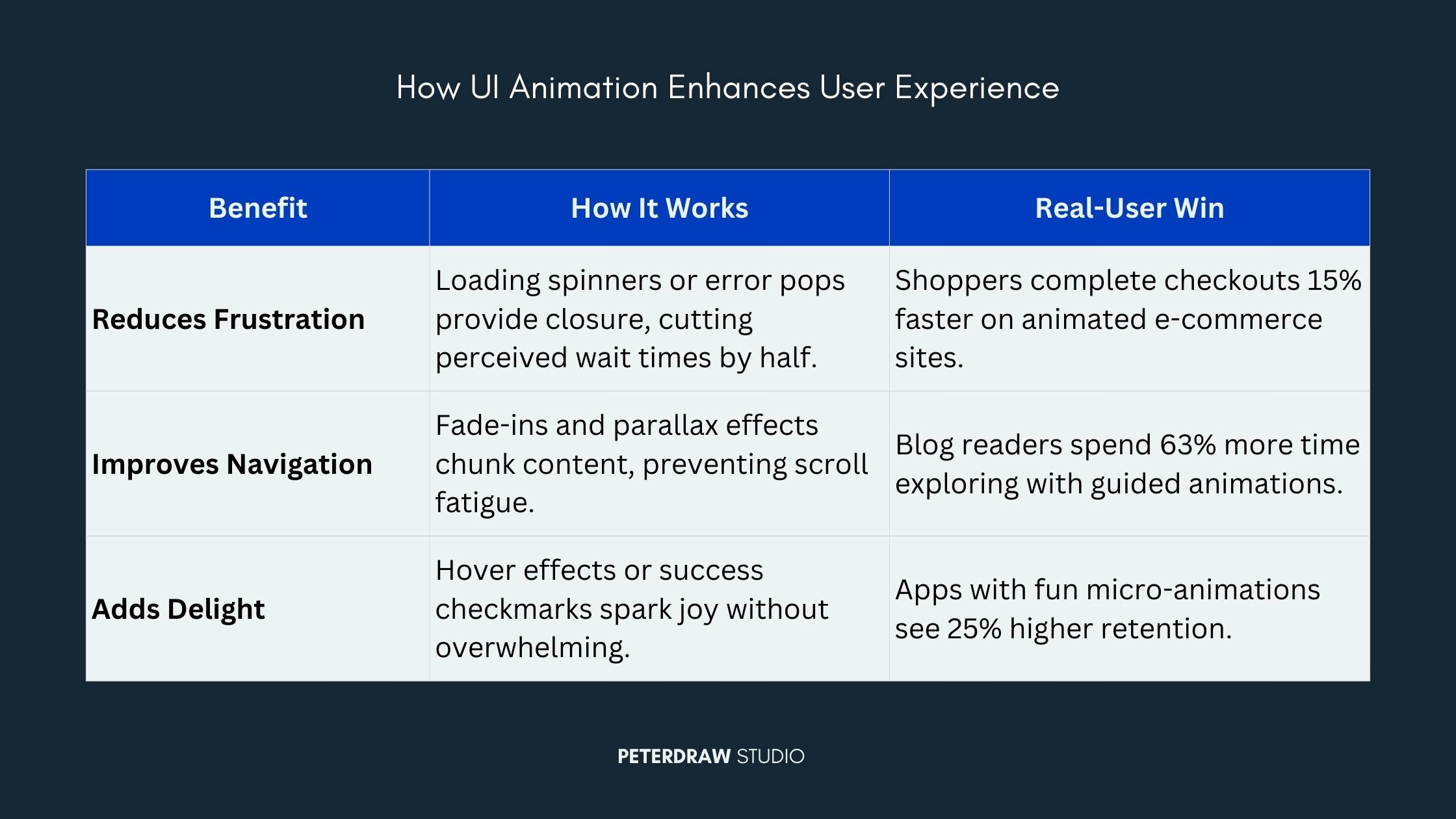
Ready to add some swing to your site? Start small to avoid pitfalls like slow loads or distractions. Here's a step-by-step playbook for effective web animation:
Pro tip: Build a motion design system with reusable patterns. This saves time and ensures brand consistency, boosting recognition by 35%.
Looking ahead, motion design continues evolving with new technology. AI tools now automate complex animations with ease. 3D interactions let users explore products in real time, boosting engagement by 73%. Scrolling effects and hidden navigation create story-like journeys that make websites unforgettable.
Sustainability matters too. Lightweight animations reduce energy use and appeal to eco-conscious audiences. As VR and AR converge with the web, interactive design becomes the bridge. It connects digital spaces with immersive worlds, offering seamless and engaging user experiences.
Motion is no longer optional. It is essential for standing out in today's high competition. Blending UI effects, interactive layouts, and smooth transitions keeps visitors engaged. From 150% higher retention to emotional responses that inspire shares, the impact is undeniable. Movement truly makes digital experiences more memorable.
Ready to animate your success? Audit your site and add one subtle interaction. Watch engagement metrics rise as users explore longer. Even small animations can boost usability and delight. Make motion design your secret tool for better performance and stronger connections online.