
.jpg)
Web Design Trends 2026 Part 2: 6 Emerging Styles Shaping the Year
Stay updated with web design trends 2026, featuring TL;DR experience, 2.5D design, and more, plus useful implementation tips.
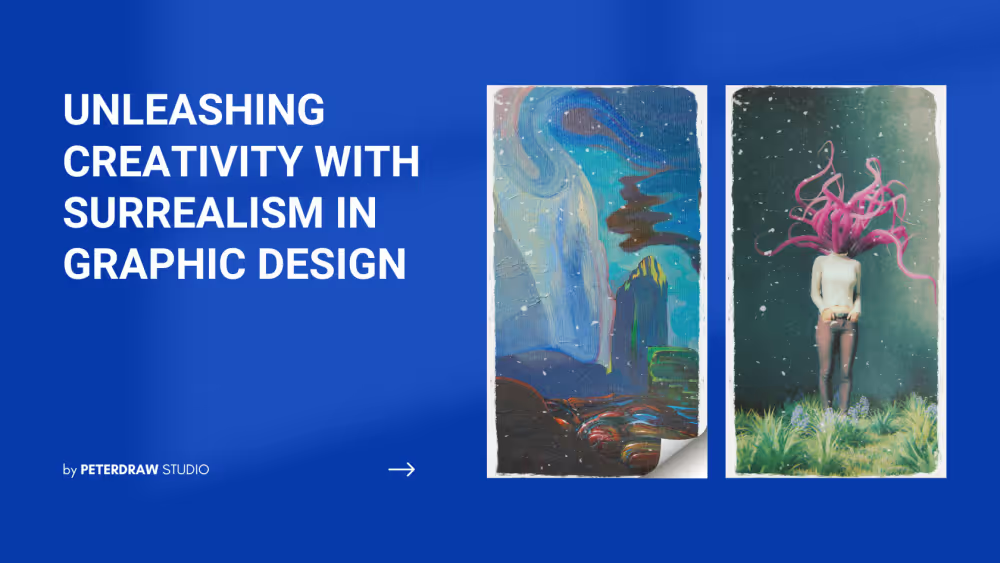


A clean, natural, real image is better for aesthetic and professional purposes. However, to deliver unconventional, eccentric, and uncommon ideas, surreal images are the better choices. Surrealism, as a movement in art, transcends the conventional boundaries. It provides so many possibilities you can achieve beyond the design you usually have and create.
Surrealism is an art movement that tried to unleash the creative potential of the unconscious mind. At its inception in the early 20th century, it emerged in painting and sculpture works. As time went by, its influence grew and permeated various cultural aspects, such as literature, poetry, music, and more. Hence, it is also known as a cultural movement.
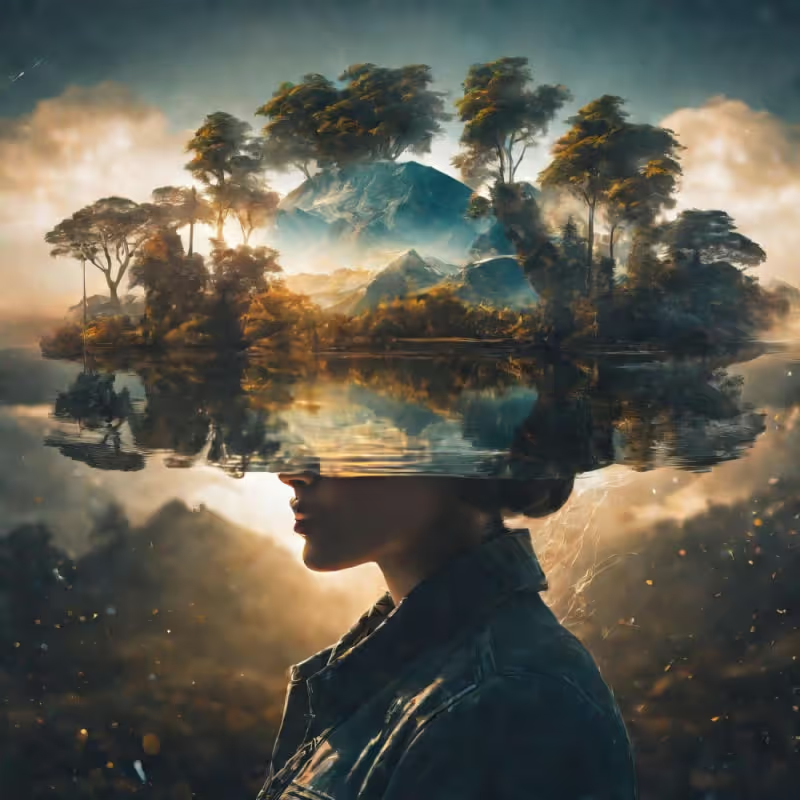
It has special characteristics, such as dreamlike, fantastical imagery, juxtapositions of incongruent elements, and a rejection of rationality. Those characteristics make every surreal work stand out more than others. For this purpose, it aims to reveal hidden truths and explore the mysterious realm of imagination. Salvador Dalí, René Magritte, and Max Ernst may be the notable artists who made significant contributions to the movement. Meanwhile, Milton Glaser put his name as the surrealist in the graphic design world.
Speaking of surrealism in graphic design, it is not much different from applying the concept to art in general. It mirrored the movement’s principles in visual communication. The designers who applied this concept sought to break free from traditional constraints. It allows them to explore the realms of the unconscious and the fantastical. Here are key aspects of surrealism in graphic design.
Surrealist graphic design often involves the juxtaposition of seemingly unrelated elements. Distorted imagery, unexpected combinations, and visual paradoxes will try to challenge the viewer’s expectations. Those elements also invite them to interpret the design on a subconscious level.
You may find a lot of bizarre and surreal scenes in surrealist works since they come from the dreams and subconscious minds of the designers. The images will be more dreamlike and have fantastical elements that defy the laws of reality, creating a sense of unreality.
Adding surrealist elements to graphic designs can help you convey deeper meanings. The design often relies on symbolic imagery and metaphors. They will evoke emotional responses and challenge rational interpretation. So, it needs more understanding to get the meaning.
In some ways, the typography in surrealism might be whimsical and unconventional. However, it also can be playful. The distorted letterforms, unusual layouts, and other typographic elements contribute to the dreamlike atmosphere.
Many people may be familiar with the collage technique often used in graphic design. However, not many people know that the technique was popularized by surrealist artists. Designers can create compositions of disparate visual elements from various sources. It results in unexpected and visually striking combinations.
Surrealism is not only about visual aesthetics and satisfaction. It aims to engage viewers on a psychological level. It also encourages them to question reality, think beyond the ordinary, and interpret visual messages in unconventional ways.
Many creative projects apply the surrealist concept, not limited only to one or two types. Among those projects, these are the common applications you can find in graphic design.
Surrealism offers a gateway to limitless creativity. From dreamlike imagery to symbolic metaphors, it transcends conventions, inviting exploration of extraordinary realms. Whether on posters, packaging, or web design, Surrealism transforms the ordinary into enchanting visual narratives—a testament to the boundless power of imagination.