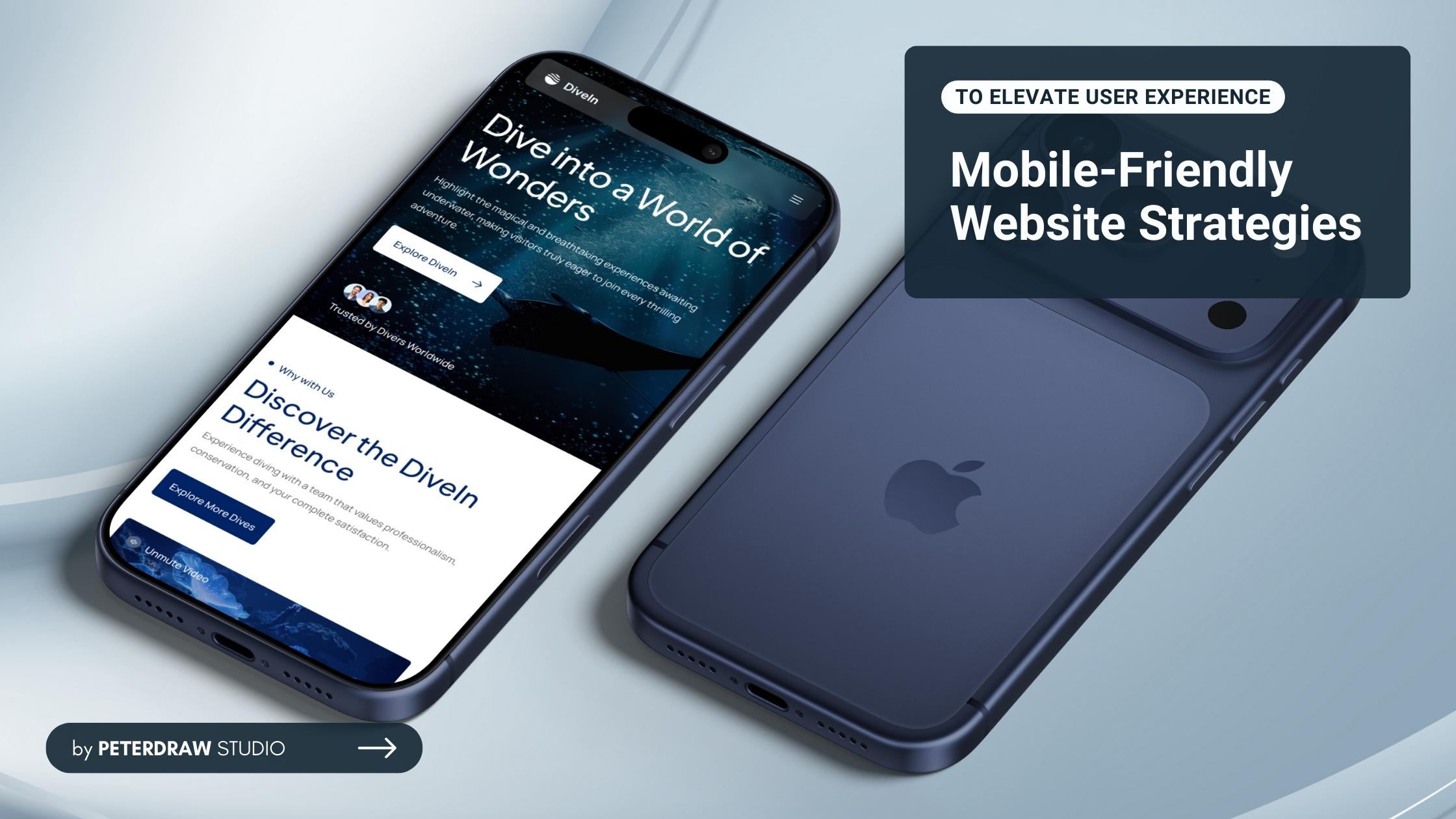
Mobile-Friendly Website Strategies to Elevate User Experience
With smartphones shaping how people browse, shop, and interact, every website must adapt to smaller screens. That is why, a mobile-friendly design is now essential for online success. A responsive layout ensures smooth navigation and consistent performance across devices. This approach improves user engagement, strengthens visibility, and keeps brands ahead in an increasingly mobile-first digital environment.
Recent statistics reveal a major shift toward mobile browsing. Around 62.54% of global website traffic now comes from mobile devices in the second quarter of 2025. Similarly, StatCounter reports 59.7% mobile usage by April 2025. These numbers emphasize that sites without mobile optimization risk losing engagement, conversions, and valuable audiences online.
So, how to optimize your website to be more mobile-friendly? Is it enough with just a looking good design?
Why Mobile-Friendly Websites Matter in Today's Landscape
Mobile usage is no longer a temporary trend but a lasting shift in behavior. Over 60% of global web traffic now comes from mobile devices, nearly doubling the figures from ten years ago. This growth is fueled by smartphone convenience, allowing users to browse, shop, and connect effortlessly. Businesses ignoring this shift risk losing valuable audiences daily.
A mobile-friendly website design is more than just visual appeal. It defines user experience and business success. Slow-loading or poorly formatted sites push visitors away quickly, increasing bounce rates. In contrast, an optimized site encourages longer engagement and higher conversions. As mobile-first design dominates, brands prioritizing this gain stronger loyalty, better retention, and measurable revenue growth over time.
Search engines like Google now reward sites built with mobile web design in mind. Since adopting mobile-first indexing, Google ranks and indexes based on mobile performance. Websites that neglect this lose visibility and organic reach. Today, optimizing for mobile isn’t optional. It’s vital for sustaining rankings, improving SEO results, and staying competitive in an increasingly mobile-driven digital world.
"What some call ‘mobile first’ is in truth already ‘mobile majority’. …being mobile-friendly, having content that is quick, usable, graceful and compelling on smartphones is not optional."— Tom Grinsted, former Guardian digital leader
Key Benefits of Implementing a Mobile-Friendly Website
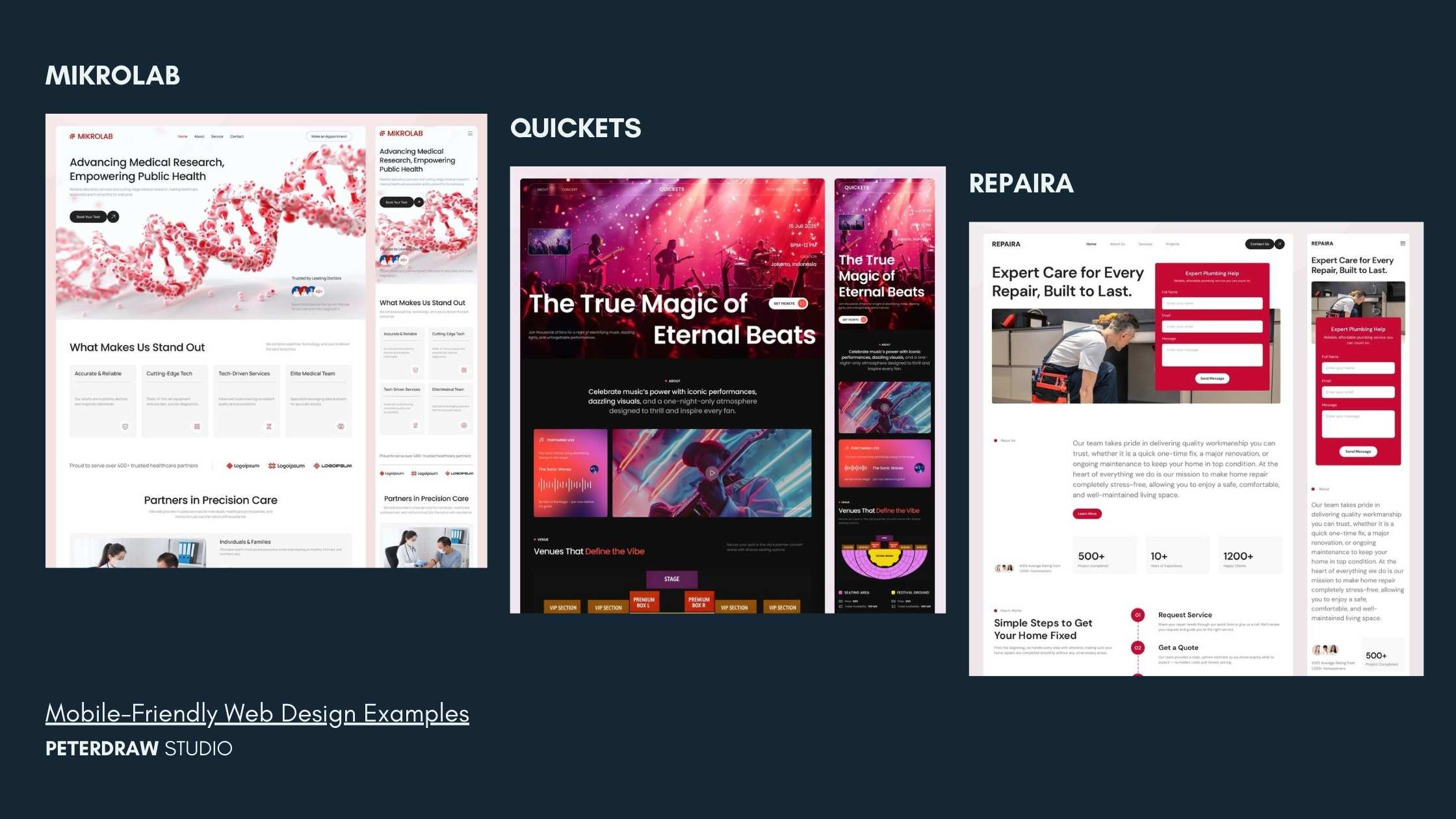
Some examples of mobile-frinedly web designs | Explore More at Peterdraw
Adopting a mobile-friendly website offers wide-ranging benefits across usability, performance, and marketing. It ensures smooth navigation, readable content, and intuitive touch gestures that make browsing effortless. With clear menus and large buttons, users can interact confidently on any device. This results in stronger engagement, encouraging visitors to stay longer and complete desired actions easily.
Enhanced Usability: Simple navigation, readable fonts, and easy touch controls improve user experience and reduce frustration.
Better SEO Performance: Search engines prioritize mobile-optimized sites, increasing rankings and organic visibility.
Improved Speed: Faster loading times lower bounce rates and encourage more interactions.
Higher Conversions: Mobile-optimized pages increase sales and lead generation by supporting instant decision-making.
Stronger Brand Credibility: A responsive, professional design shows reliability and modern appeal.
Future-Ready Design: Adapts smoothly to new mobile technologies and evolving device standards.
Greater Accessibility: Expands reach to users relying primarily on mobile devices for internet access.
These elements ensure a mobile-friendly design delivers smooth and satisfying user experiences. It also drives business growth, boosts visibility, and promotes inclusivity across digital platforms.
Best Practices for Mobile-Friendly Website Design
Building a mobile-friendly website requires thoughtful planning and smart execution. Responsive design should be the foundation, allowing layouts to adapt automatically across screens. This ensures consistency on desktops, tablets, and smartphones. Every element, from navigation to typography, should enhance accessibility, readability, and comfort for users browsing on mobile devices.
Use Responsive Design: Apply flexible grids and media queries for adaptive layouts.
Add a Viewport Meta Tag: Control page scaling and avoid zooming problems.
Simplify Navigation: Use hamburger menus or collapsible sections to save space.
Ensure Readable Typography: Keep fonts at least 16px and use clear contrasts.
Design for Touch: Space buttons properly to prevent accidental taps.
Avoid Pop-Ups: Eliminate intrusive elements that disrupt user flow.
Leverage Mobile Features: Add click-to-call buttons or location-based interactions.
Focus on Minimalism: Keep layouts clean and highlight essential content only.
Test Across Devices: Use tools like BrowserStack for consistent mobile performance.
Applying these practices ensures your mobile-friendly website design remains fast, intuitive, and effective across every device and platform.
The SEO Impact of a Mobile-Friendly Design
A mobile-friendly design is crucial for SEO success. With Google’s mobile-first indexing, your site’s mobile version determines its search ranking. Any inconsistency between desktop and mobile can hurt visibility. Optimizing for mobile ensures smooth indexing, better user experiences, and higher rankings across search results on all devices.
Mobile-optimized sites load faster and improve core web vitals, which measure speed, responsiveness, and visual stability. These factors influence how search engines evaluate user satisfaction. Clear layouts, optimized images, and responsive structures also enhance crawlability. When search bots easily access and understand your content, your SEO performance improves significantly.
To strengthen mobile SEO, keep content concise and readable. Use short paragraphs, bullet lists, and scannable headings for easy mobile consumption. Prioritize voice search optimization as more users rely on assistants like Siri or Google Assistant. Regularly audit using Google’s Mobile-Friendly Test to maintain consistent, penalty-free performance.
Common Mistakes to Avoid in Mobile Web Design
While pursuing mobile web design, steer clear of pitfalls like fixed-width layouts that fail to adapt, causing unnecessary horizontal scrolling. Avoid overloading pages with large, uncompressed media files that slow down performance. Neglecting touch-friendly elements or using outdated tech like Flash can also disrupt usability and accessibility.
Always test your mobile-friendly website design across multiple devices and varying network speeds to detect real-world issues early. Regular updates help maintain compatibility with new mobile operating systems. Staying consistent with optimization ensures your website delivers a smooth, reliable, and satisfying experience for every visitor.
Embracing the Future of Mobile-Friendly Website Design
The evolution of digital behavior continues to shape how people connect, explore, and purchase online. As mobile technology advances, businesses must adapt with agility and creativity. Building seamless digital experiences requires more than functionality. It demands emotional connection, effortless navigation, and purposeful design that resonates with users on every screen size.
A mobile-friendly website is more than a design choice. It’s a long-term strategy for growth and relevance. As devices, networks, and user expectations evolve, responsive design becomes the foundation for trust and success. By embracing mobile-first thinking today, brands can ensure a consistent, engaging, and future-ready presence across the digital landscape.